Local AI reads the motion in the scene and writes the strokes, then drives your device in time with the video — deep where the scene is deep, shallow where it isn't. It runs on your own GPU: the file never leaves your PC. The Autoblow AI Ultra over its cloud, plus The Handy, Kiiroo, Lovense and OSR through Intiface.
It gets better every month, and you never pay again. The AI is actively developed — new releases land weekly to monthly, and every one is a free update for life. Come and see what is being worked on, ask for a feature, or tell us what it got wrong, in the Discord community.
Load a video, generate, play. Analysis, device fitting, smoothing and sync are handled for you; the settings are all still there when you want them.
Dual-track pose + optical-flow tracking generates a funscript from on-screen motion. No cloud, no upload, fully offline.
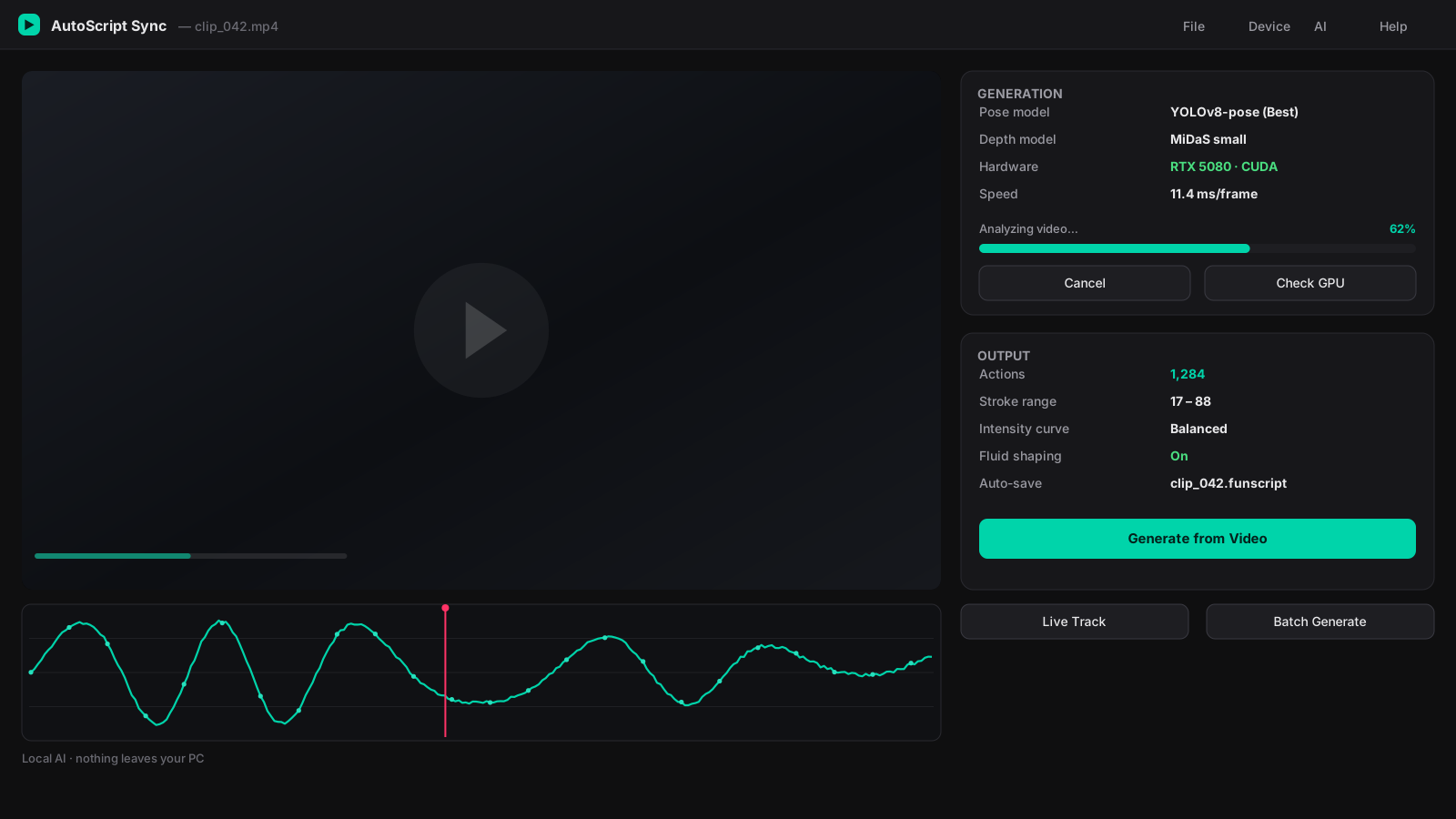
Auto-detects your card and installs the matching CUDA runtime — including CUDA 12.8 for RTX 50-series. Check GPU verifies real speed.
Every stroke is eased into an S-curve like the device's own presets, plus a de-jitter pass that removes real-footage micro-noise.
Teach it acts at the playhead and it tunes depth and intensity to your library. Review-uncertain jumps you to where it needs help.
Autoblow AI Ultra over the cloud, or any Buttplug device via Intiface — the server auto-installs on first connect.
Stream to a Quest with DeoVR and stay perfectly in sync, with real-time drift correction keeping motion locked to the video.
An optional depth model reads the in/out axis that 2D can't see — the motion toward the camera in POV scenes.
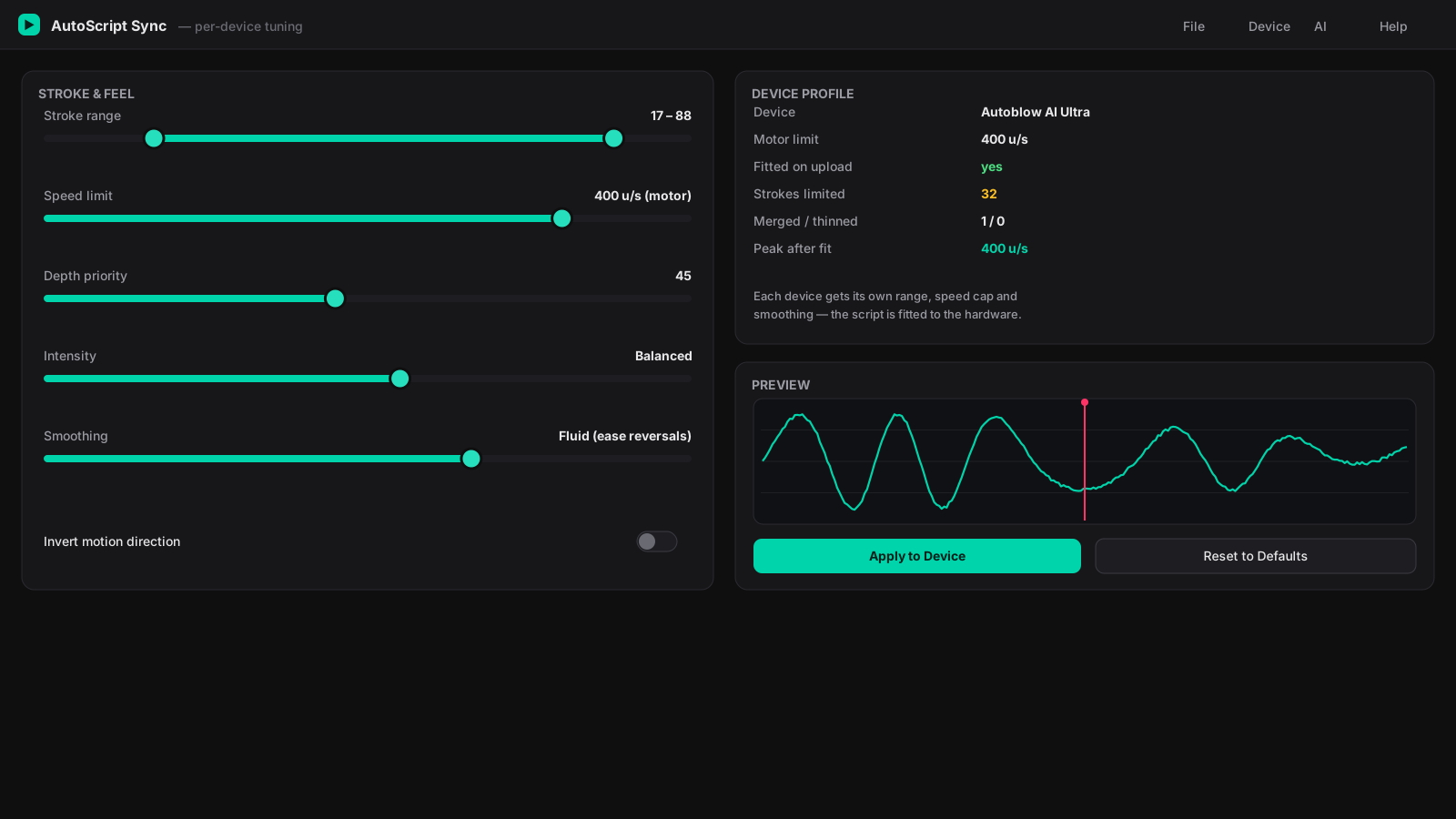
Stroke range, intensity, depth emphasis, invert, offset, motion region, and a timeline editor with amplify/soften/smooth.
App, AI models and the device engine all stay current automatically — checked quietly at every launch.
Every feature below ships today. The images are renders of the app's own screens, not photographs of one.
Point AutoScript Sync at a video and local AI models (YOLOv8 pose + MiDaS depth) build a full funscript — no cloud, no uploads, everything runs on your GPU.
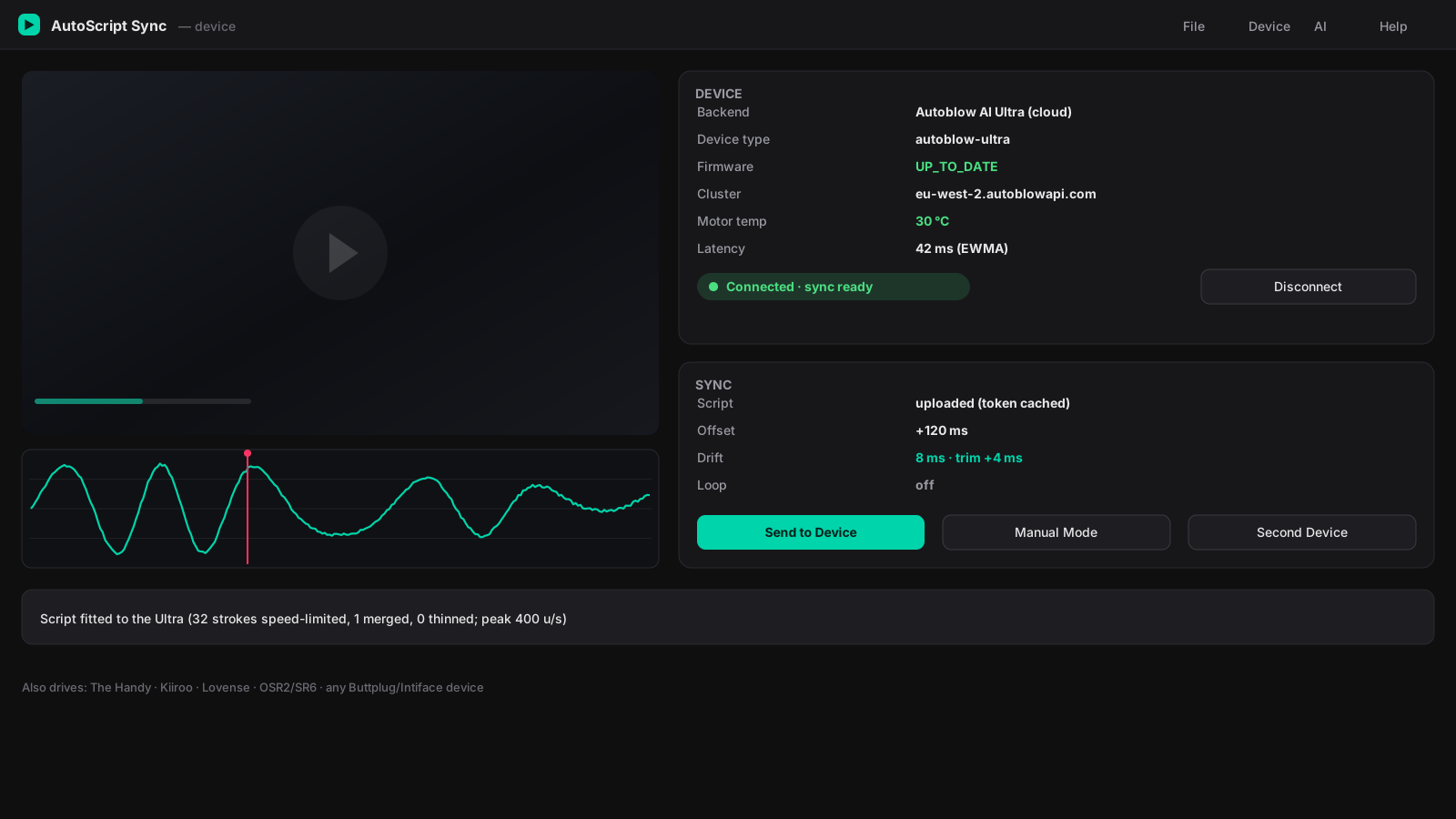
Play the video and the app streams motion to your device in fluid sync — the Autoblow AI Ultra over its cloud API, plus The Handy, Kiiroo, Lovense, OSR and more via Intiface.
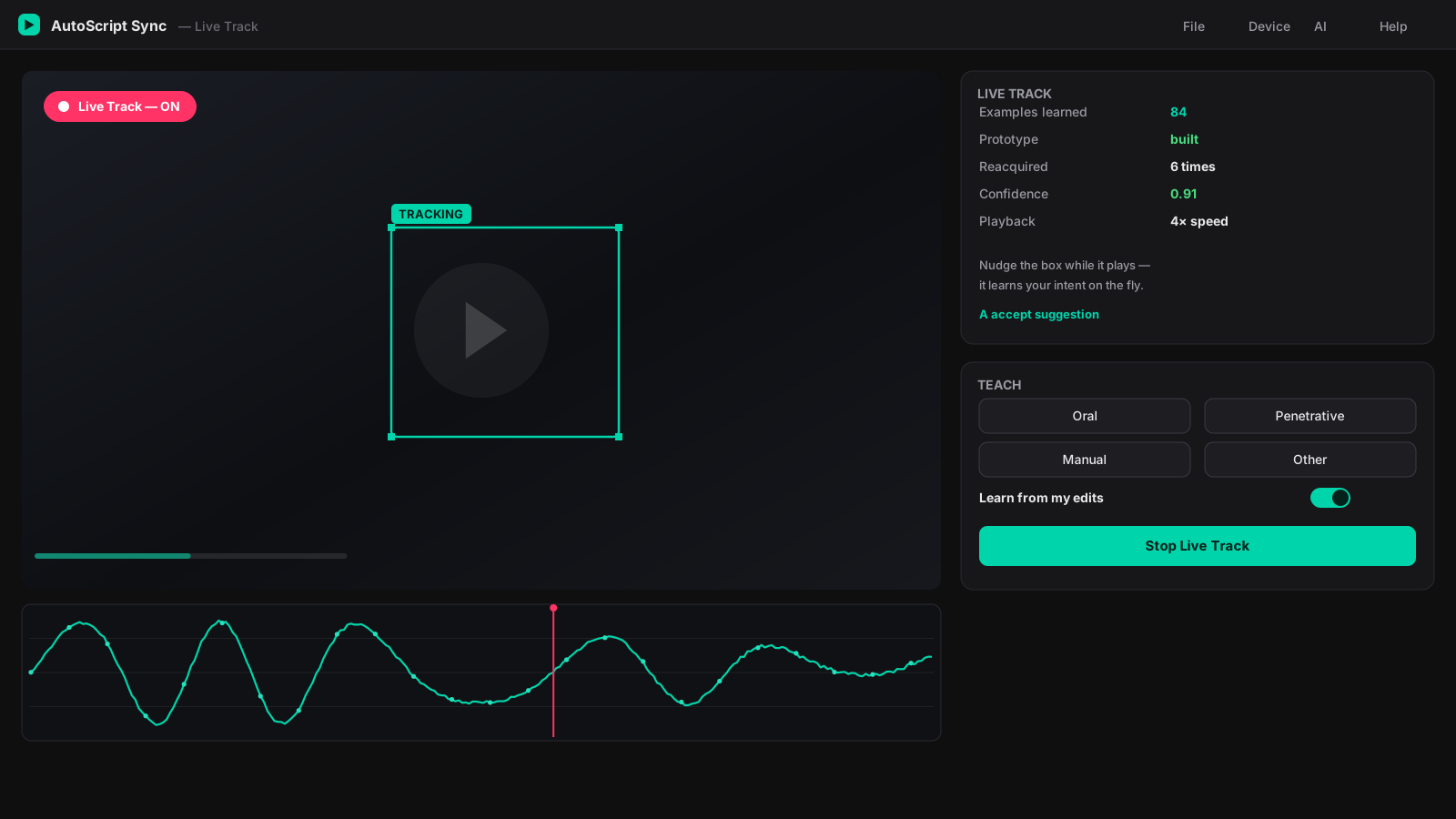
Nudge the tracker while a video plays and it learns your intent on the fly — reacquiring the action when the shot changes, without you scripting a thing.
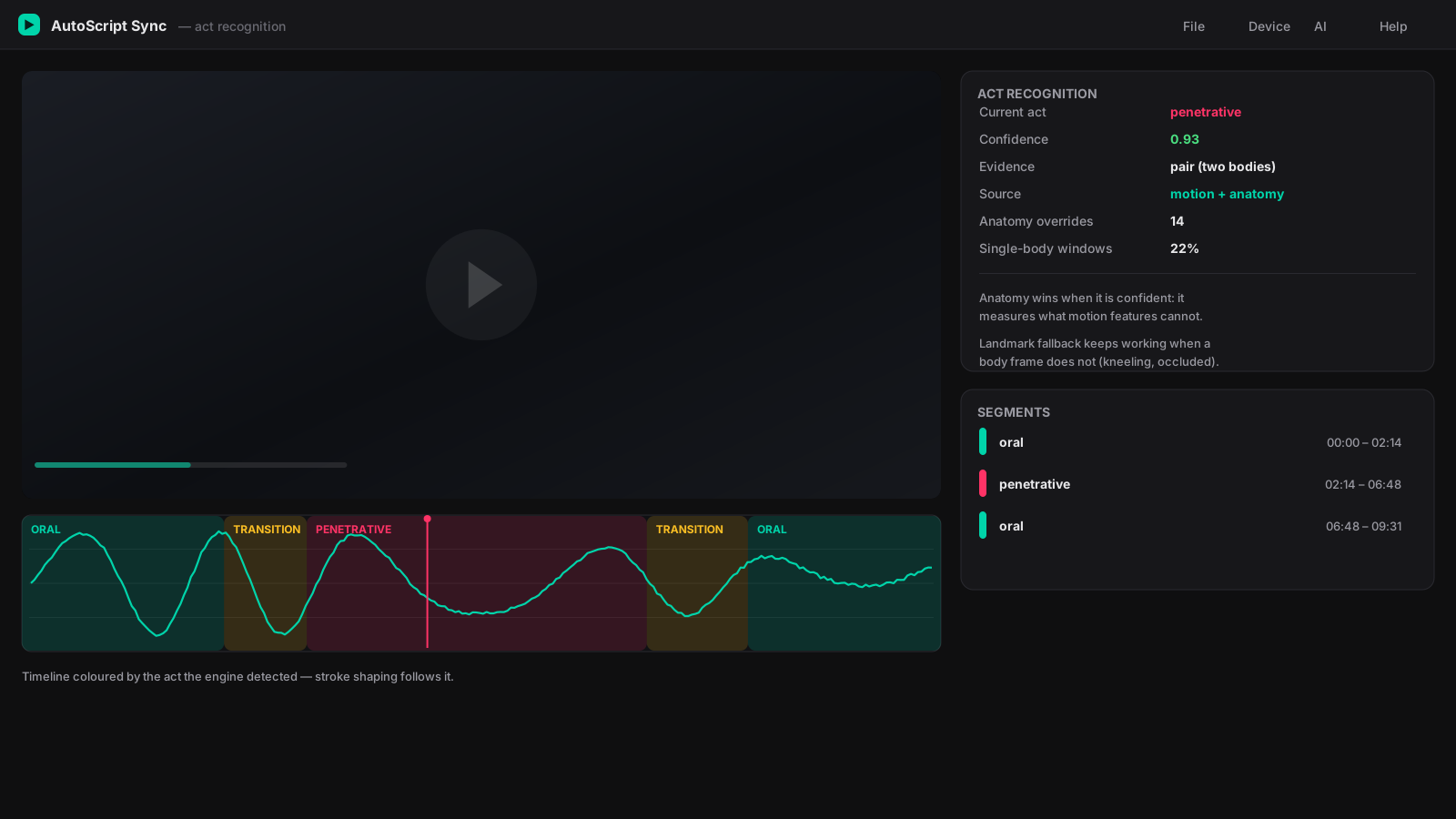
The engine tells oral from penetrative motion and shapes the stroke to match, so the output feels right for what's actually happening on screen.
Every device gets its own stroke range, speed limit and smoothing, and the script is fitted to the hardware on upload so it never asks for more than the motor can give.
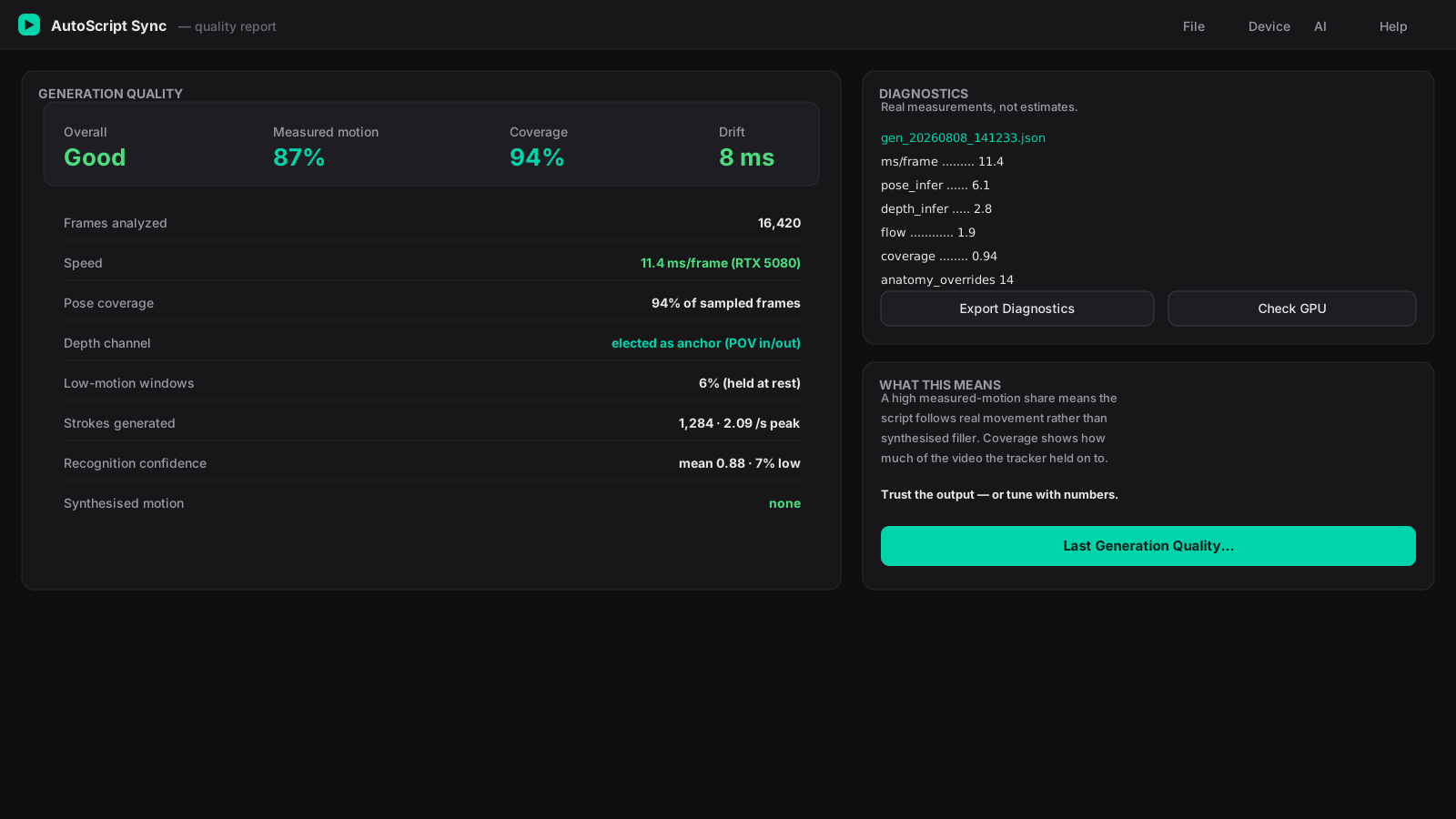
A quality report and real diagnostics (ms/frame, coverage, drift) show what the run produced — so you can trust the output and tune with real numbers, not guesswork.
Open Report Studio — explore any report or script in your browser →
Built around the Autoblow AI Ultra — its script is uploaded to the device and played back on the device itself, with latency compensation and drift correction against the video clock, and stroke reversals placed on the 16 fps grid that Autoblow's published motion analysis uses. That is the device this app is tuned for. How the Autoblow AI Ultra setup and sync work.
Everything else connects through Intiface/Buttplug over Bluetooth, driven in real time. Each one carries its own measured limits — stroke speed, command interval and maximum stroke rate — so a script is never asked for motion the motor cannot make:
Pick your exact model in the app and it loads that device's real capabilities before you connect.
The whole flow, start to finish.
Paste your Autoblow token (or pick Intiface for other devices) and hit Connect. Test Stroke confirms control.
File → Open Video. If a matching .funscript sits next to
it, that loads automatically.
Click Generate from Video. Local AI analyses the motion on your GPU with a live progress bar and time estimate.
Send Script to Device fits it to your hardware — range, intensity and fluid easing baked in — and uploads.
The device tracks the video in real time. Pause, seek and scrub freely — it follows instantly.
Adjust Offset if it's early or late, and Depth emphasis for deeper strokes. Re-send after any change.
Click Download best and the app recommends the right tier for your hardware. Here's the full picture.
| Tier | Model | Best for | Size |
|---|---|---|---|
| Fast | yolov8n-pose | Weak CPUs, quick tests | ~13 MB |
| Balanced ★ | yolov8s-pose | The sweet spot — recommended for almost everyone | ~45 MB |
| Accurate | yolov8m-pose | Noticeably sharper; likes a GPU | ~99 MB |
| Best | yolov8l-pose | Max accuracy; GPU strongly advised | ~168 MB |
| Tier | Model | Best for | Size |
|---|---|---|---|
| Fast ★ | MiDaS-small | Recommended — fast and reliable POV depth | ~64 MB |
| Best | MiDaS-large | Sharper depth, but slow to start — only with a strong GPU | ~400 MB |
A reference for everything in the app — also built into Help → Instructions.
Device type — Autoblow AI Ultra (cloud, plays a device-fitted
script for the smoothest motion) or Intiface/Buttplug (local, real-time;
the server auto-installs on first connect).
Connect / Test Connection / Test Stroke — pair, verify the link,
and run one gentle stroke so you know control works before playing.
VR headset — enter your Quest's IP with DeoVR Remote Control
enabled; the video streams to the headset and stays in sync.
Stroke range — the physical window the device moves in; narrow it
for gentler sessions, the rhythm is preserved.
Intensity — scales stroke depth around the midpoint.
Fluid motion (ease reversals) — the smoothness switch. Converts
hard direction changes into eased S-curves like the device's presets.
Leave it on; re-send after changing.
Depth emphasis — makes deep strokes travel proportionally further
(non-POV "goes deep" feel). 100% is neutral.
Invert motion direction — flips up/down if the feel is reversed
for your mounting.
Manual mode — a device-side oscillator between your range points
at the set speed; no video needed.
Generate from Video — full local AI analysis into a script; the
progress bar shows percent and time remaining.
Generate + Play (instant) — analyses the first stretch so you can
start immediately; the full script replaces it when ready.
Set Motion Region — draw a box to pin tracking where you want it
when auto-detection grabs the wrong thing.
Send Script to Device — fits the script to the device and uploads;
identical re-sends skip the upload (cached 48h).
Accuracy / Hardware / Curve — analysis density, GPU selection, and
motion curve (Smoothed is the most natural).
Pose / Depth model + Download best — optional AI models; Download
best fetches, verifies and applies one automatically.
Check GPU — reports whether analysis is really using your card,
with exact fix commands if not.
Teach at playhead / Review uncertain / Learn from my edits — train
the classifier on your library and let it learn your editing taste.
Shift+drag selects a region, then Amplify, Soften, Shift timing, Smooth, Delete, Loop or Re-analyze that span. Ctrl+wheel zooms, Ctrl+S saves. Coloured bands show recognised acts; red ticks mark scene cuts. Offset shifts device timing — positive if it feels late, negative if early.
Everything auto-matches your machine. The installer scans your GPU and installs the correct AI runtime — CUDA 12.8 for RTX 50-series, CUDA 12.1 for other NVIDIA cards, CPU otherwise. Models, the device engine and app updates stay current at launch. If "GPU (CUDA)" isn't working, Check GPU shows exactly why and how to fix it.
Every review is written with a real licence key, so it comes from someone who bought AutoScript Sync. Genuine reviews are published whether they're good or bad.
No reviews have been published yet. Bought it? Be the first to review it.
Two ways to connect: the Autoblow AI Ultra over its cloud API, or any Buttplug device through the free Intiface engine (auto-installed) — The Handy, Kiiroo, Lovense, OSR2/SR6 and many more, streamed live and locally. Setup and sync for the Ultra are covered on the Autoblow AI Ultra page.
No. All AI analysis runs locally on your PC. The only network traffic is the Autoblow cloud control channel (if you use that device) and optional one-time model downloads.
No — it runs on CPU too, just slower. A modern NVIDIA GPU dramatically speeds up analysis. On RTX 50-series the installer sets up the required CUDA 12.8 runtime automatically.
Analysis processes tens of thousands of frames. On GPU that's minutes, not hours. If it's slow, lower the Accuracy setting and confirm the GPU is engaged with Check GPU.
Make sure Fluid motion is ticked in Stroke Settings, then re-send the script. That converts every reversal into a smooth eased curve. A variable script won't feel identical to a fixed preset — that variation is the point.
One Windows installer. Detects your hardware, sets up the AI runtime, and gets you generating in minutes.
The most useful thing you can send us is work you did by hand: a hand-tracked funscript, a Live Track session where you corrected the tracking yourself, or your AI Bulk Learn labels. Those are the one thing we cannot generate ourselves — a hand-made script is the reference the generator is scored against, so every one we get makes the next improvement measurable instead of guesswork.
Any .funscript you tracked or corrected by hand, and
the .roitrack.json that Live Track writes beside the
video — that one is the most valuable file of the lot, because it
records the region you followed frame by frame, which is a direct
answer to "where should the tracker have been looking". Add the
matching gen_*.json from your diagnostics folder if
you have it, and your AI Bulk Learn labels from
review_queue.json in the same folder.
Numbers. Timestamps, stroke positions and timing measurements. No video, no images, no audio — none of your media is included and none of it ever leaves your PC.
Use it to test and improve the tracking, and nothing else. We do not publish it, sell it, or share it. Ask us to delete yours at any time and we will.
Both files record the filename of the video you
scripted, and a filename usually says what the scene was. If you
would rather not share that — most people would not — rename the
files before sending, or open the .json in Notepad and
replace the "video" value with anything you like. It
makes no difference to us: we only need the motion data, not the
title.
Sending is entirely voluntary, has no effect on your licence, and nothing is ever uploaded automatically. The app does not phone home with your data — if you want us to have something, you email it deliberately.
%USERPROFILE%\.autoscript_sync\logs
We build small, focused Windows tools that each do one job properly.
Stop scrolling. It organises your video collection and intelligently picks what to watch next — smart randomisation weighted by what you have actually watched, auto-tagging, Smart Views, hover previews, duplicate finding and a series organiser.
See it in action on RollMyLibrary →